
admin

About admin
Posts by :

Amber Summers

About Amber
Real estate is all about people, relationships, and knowing when to make the right move.
Born in Kettering and a proud Springboro graduate, I’ve spent my career in sales and have always loved the excitement that comes with closing a great deal. Today, I bring that same energy and dedication into real estate, where my clients always come first. I’m passionate about providing strong communication, exceptional service, and a smooth experience from start to finish.
Amber Summers
REALTOR® proudly serving buyers and sellers across Southwest Ohio.
Cassidy Pratt

About Cassidy
Southwest Ohio is more than a market — it’s my community.
With decades of experience in customer service and a passion for helping people, I bring a client-first approach to every transaction. I’m Cassidy Pratt — a dedicated REALTOR® with Record Year Realty serving buyers and sellers across the Dayton and Cincinnati metro areas.
Whether you’re buying your first home or upgrading to your dream space, I specialize in the communities of Waynesville, Springboro, Franklin, Centerville, Bellbrook, and Miamisburg — and I’d love to connect.
Cassidy Pratt
REALTOR® · Record Year Realty · Dayton & Cincinnati Metro
Jamie Cain

About Jamie
Real estate isn’t just about property — it’s about creating opportunities.
As a licensed Ohio broker, investor, and auctioneer with more than a decade of experience, I specialize in helping clients think strategically, move confidently, and maximize value through both traditional real estate and auction sales. I’m passionate about making the process approachable, exciting, and rewarding while helping people turn big goals into real results.
Jamie Cain
Broker, Investor, Auctioneer, and Founder of One Bid Auctions
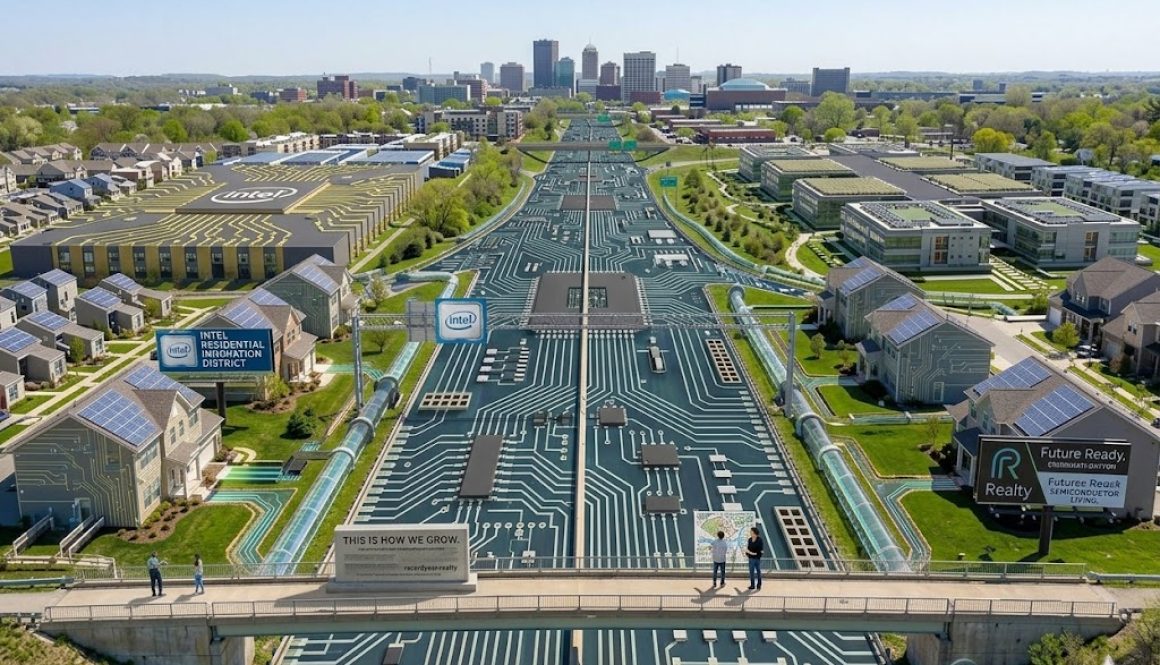
How Intel’s Ohio Semiconductor Investment Is Reshaping Housing Demand Across Cincinnati and Dayton
Ohio’s housing market is entering a new phase of regional interconnectedness, and Intel’s semiconductor investment near Columbus is one of the clearest catalysts. While the project itself is centered in central Ohio, its influence is extending well beyond one metro area — subtly afecting housing demand, migration patterns, and investor strategy across the state, including in Cincinnati and Dayton.
Rather than pulling activity away from other cities, Intel’s expansion is reinforcing Ohio’s position as a competitive employment hub in the Midwest. As job growth accelerates and supporting industries expand, buyers and investors are increasingly thinking regionally, not city by city.
This article explains how Intel’s investment is influencing housing demand in the Cincinnati–Dayton market, why this kind of spillover is common in large-scale economic growth cycles, and what it means for buyers and investors planning for the next several years.
Intel’s Investment as a Statewide Economic Anchor
Intel’s semiconductor development near New Albany represents one of the largest private investments in Ohio’s history. Beyond the manufacturing facilities themselves, the project is designed to support a long-term technology and advanced manufacturing ecosystem that includes:
- High-skilled engineering and technical roles
- Construction and infrastructure jobs
- Supplier and logistics networks
- Research, education, and training partnerships
Projects of this scale rarely operate in isolation. Instead, they strengthen entire regions by increasing employment stability, attracting related businesses, and raising confidence among both residents and investors.
For Ohio, this means Columbus functions as the anchor, while surrounding metros — including Cincinnati and Dayton — participate in the broader growth cycle.
Why Large Job Investments Afect Multiple Housing Markets
When a major employer expands, housing demand typically responds in stages:
- Immediate local demand near the job site
- Secondary demand in adjacent suburbs and metros
- Tertiary demand in established markets within reasonable travel distance
This pattern is not unique to Ohio. Similar efects have been observed near major tech, automotive, and logistics hubs across the country.
In this case, Cincinnati and Dayton fall well within the secondary and tertiary influence zones, particularly for workers, contractors, and businesses that do not require daily on-site presence.
The Role of Hybrid and Distributed Work
One reason Intel’s investment has broader geographic implications is the modern structure of work.
Many roles connected to semiconductor manufacturing and its support industries involve:
- Hybrid schedules
- Periodic on-site presence
- Regional travel rather than daily commuting
This flexibility allows households to prioritize housing value, community fit, and lifestyle alongside employment considerations.
For some buyers, that means remaining in or relocating to established metros like Cincinnati or Dayton while still participating in statewide job growth tied to central Ohio.
Cincinnati and Dayton as Complementary Markets
Cincinnati and Dayton ofer characteristics that make them natural complements to Columbus rather than substitutes.
Established Housing Stock and Neighborhood Variety
Both metros provide:
- A wide range of housing types and price points
- Mature neighborhoods with existing infrastructure
- Suburban, urban, and semi-rural living options
This diversity gives buyers more flexibility than fast-growing, tightly constrained markets.
Diverse Employment Bases
In addition to benefiting indirectly from Intel’s expansion, Cincinnati and Dayton already support strong job sectors, including:
- Healthcare
- Manufacturing and logistics
- Defense and aerospace (particularly in the Dayton region)
- Finance, consumer goods, and professional services
This diversification reduces dependence on any single employer and supports housing market stability.
Migration Patterns Are Becoming More Regional
Rather than a mass relocation from one city to another, Intel’s investment is contributing to
regional mobility. Examples include:
- Households relocating to Ohio for tech or manufacturing roles and choosing Cincinnati or Dayton based on housing needs
- Existing Ohio residents adjusting where they live as work becomes more flexible
- Buyers expanding search areas across multiple metros instead of focusing on one city
For housing markets, this translates into incremental demand spread across multiple regions, which tends to support steady growth rather than sudden price spikes.
What This Means for Homebuyers in Cincinnati and Dayton
For buyers, statewide job growth can influence local housing conditions even if the jobs themselves are located elsewhere.
Potential efects include:
- Increased competition for move-in-ready homes
- Greater interest from out-of-area buyers
- More confidence among builders and developers
Importantly, this type of demand is often less speculative. Buyers relocating for employment tend to stay longer, contributing to neighborhood stability.
For first-time and move-up buyers, understanding these broader forces can help with timing and location decisions.
Investor Perspective: Stability Over Speculation
Real estate investors often view large, long-term job investments as indicators of market durability rather than short-term opportunity.
In the Cincinnati–Dayton region, Intel’s presence contributes to:
- Stronger long-term rental demand
- A broader tenant pool tied to multiple employment centers
- Reduced reliance on local economic cycles
Rather than chasing rapid appreciation, many investors are targeting southwest Ohio for predictable cash flow and gradual value growth, especially compared to markets experiencing sharper volatility.
The Importance of Transportation and Regional Access Infrastructure plays a key role in how economic growth spreads. Cincinnati and Dayton benefit from:
- Interstate connectivity
- Proximity to major logistics corridors
- Access to multiple regional airports
These factors make it feasible for businesses and workers to operate across metro boundaries, reinforcing the idea of a connected Ohio housing market.
Housing Development Responds to Confidence
As confidence in statewide growth increases, housing development often follows — not just near job sites, but in established markets where demand is reliable.
In southwest Ohio, this can mean:
- Continued suburban development
- Renovation and reuse of existing housing stock
- Increased interest in mixed-use and infill projects
These trends tend to support both owner-occupant and rental housing demand.
Avoiding the “Zero-Sum” View of Ohio Housing
One of the most important takeaways from Intel’s investment is that Ohio’s housing markets are not competing in a zero-sum game.
Growth in Columbus:
- Strengthens the state’s national profile
- Attracts employers and talent
- Increases confidence across all major metros
Cincinnati and Dayton benefit not by replacing Columbus, but by ofering additional housing options within a growing state economy.
Long-Term Outlook for Southwest Ohio
Looking ahead, Intel’s presence reinforces several long-term expectations for the Cincinnati–Dayton housing market:
- Continued relevance as part of a multi-metro regional economy
- Stable demand supported by diversified employment
- Gradual appreciation tied to real job growth rather than speculation
For buyers and investors, these conditions favor thoughtful, long-term decision-making over short-term market timing.
Final Thoughts
Intel’s semiconductor investment is best understood as a statewide catalyst, not a localized event. Its influence on housing demand reaches well beyond central Ohio, contributing to a more interconnected and resilient real estate landscape across Cincinnati, Dayton, and surrounding communities.
For those navigating the southwest Ohio housing market, understanding these broader dynamics provides valuable context — and a clearer picture of where long-term opportunity lies.
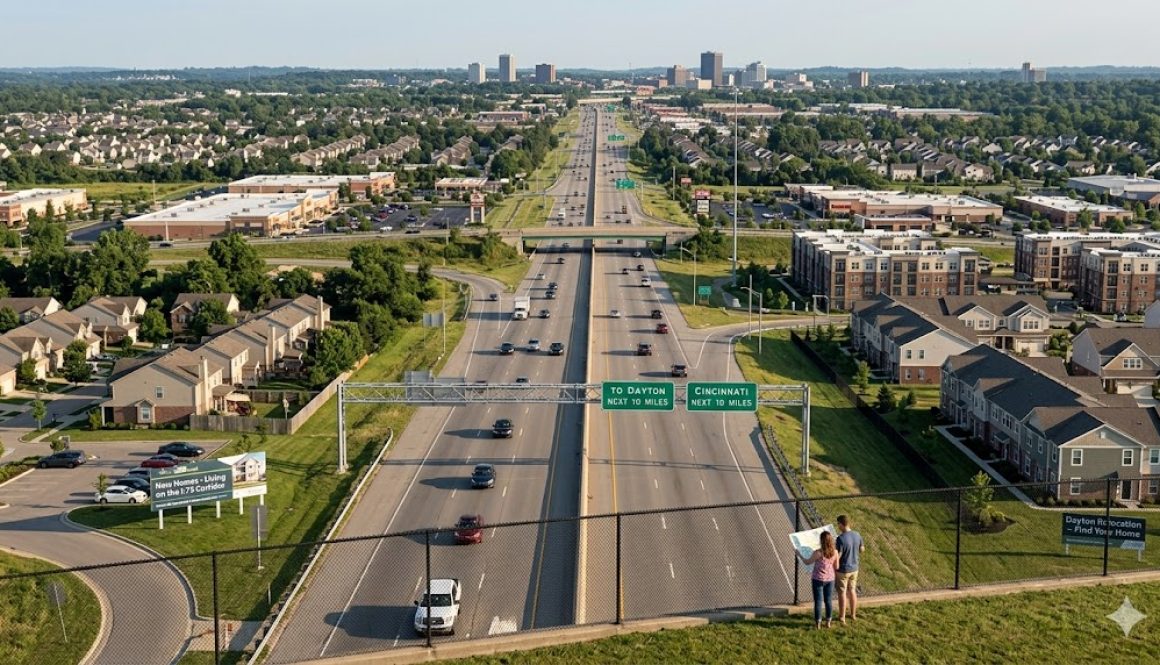
Why Cincinnati-to-Dayton Relocation Is Surging: The New I-75 Housing Corridor Trend
Over the past several years, a quiet but powerful housing trend has been taking shape in southwest Ohio. Buyers who once limited their searches strictly to Cincinnati or Dayton are now widening their focus to include communities in between. This shift has turned the I-75 corridor into one of the most active relocation and investment zones in the region.
Rising home prices, hybrid work flexibility, and major infrastructure investment are driving more households and investors to rethink what “local” really means. Instead of choosing one metro over the other, buyers are discovering that the stretch between Cincinnati and Dayton ofers affordability, accessibility, and long-term upside.
This article breaks down why the Cincinnati-to-Dayton relocation trend is accelerating, which communities are benefiting most, and what buyers and investors should understand before making a move along the I-75 corridor.
The I-75 Corridor: From Commuter Highway to Housing Hotspot
Interstate 75 has always been a major transportation artery, but its role in the housing market has changed dramatically. What was once viewed primarily as a commuter route is now functioning as a regional housing spine connecting two major employment hubs.
Several factors are driving this transformation:
- Hybrid and remote work have reduced the need for daily ofice commutes
- Home prices in core metro areas have risen faster than incomes
- Suburban and exurban communities along I-75 are actively developing housing, retail, and infrastructure
- Buyers are prioritizing square footage, flexibility, and value over proximity to downtown ofices
Instead of asking “Cincinnati or Dayton?”, many buyers are now asking, “Where along I-75 can I get the most for my money?”
Affordability Is the Primary Driver
The most consistent reason buyers cite for relocating between Cincinnati and Dayton is afordability — especially when measured by price per square foot.
While exact figures vary by neighborhood and market cycle, general pricing patterns are clear.
Price-Per-Square-Foot Comparison (Typical Ranges)
West Chester (Butler County)
Higher demand due to schools, retail, and corporate presence Generally higher price per square foot than surrounding suburbs
Monroe
More moderate pricing with newer construction options
Attractive to buyers seeking space without West Chester premiums
Springboro (Warren County)
Competitive pricing with strong school districts Popular with families relocating from both metros
Vandalia (Montgomery County)
Lower price per square foot compared to Cincinnati-side suburbs Increasing interest from investors and value-focused buyers
For buyers priced out of central Cincinnati suburbs or inner-ring Dayton neighborhoods, moving 20–30 minutes north or south can unlock significantly more home for the same budget.
Hybrid Work Has Redefined “Commutable”
Before 2020, living between Cincinnati and Dayton often meant committing to a long daily drive. Today, that assumption no longer holds.
Many households now:
- Commute two to three days per week
- Work fully remote with occasional in-ofice meetings
- Split work locations between Cincinnati, Dayton, and Columbus
This has expanded the definition of what counts as a “reasonable commute.”
Typical Commute Times Along I-75
- West Chester to downtown Cincinnati: ~25 minutes
- Monroe to downtown Dayton: ~30 minutes
- Springboro to either downtown: ~30–40 minutes
For hybrid workers, these distances are manageable — especially when balanced against lower housing costs and larger living spaces.
New Development Is Following Demand
Developers have been paying close attention to migration patterns along I-75, and their investments reflect it.
Residential Growth
- New single-family subdivisions targeting move-up buyers
- Townhomes and low-maintenance housing for downsizers
- Rental developments designed for workforce and hybrid professionals
Commercial & Infrastructure Investment
- Expanded retail centers near interchanges
- Medical ofices and outpatient facilities
- Road improvements and interchange upgrades to reduce congestion
Communities like West Chester, Monroe, and Springboro have been particularly proactive in planning growth, which helps stabilize property values and attract long-term residents.
Why Buyers Are Leaving Core Metro Areas
This relocation trend isn’t just about chasing cheaper homes — it’s about changing priorities.
Many buyers leaving core Cincinnati or Dayton neighborhoods cite:
- Smaller lots and limited storage
- Aging housing stock requiring renovations
- Competitive bidding wars
- Higher property taxes relative to home size
By relocating along the I-75 corridor, buyers often gain:
- Newer construction or recently updated homes
- Larger lots or more usable interior space
- Easier parking and less congestion
- Access to both metro job markets
For families, the combination of school districts, space, and value is particularly compelling.
Investor Interest Is Rising Along the Corridor
The I-75 housing corridor isn’t just attracting owner-occupants. Real estate investors are increasingly targeting these communities for both short- and long-term strategies.
Why Investors Are Paying Attention
- Lower acquisition costs than urban cores
- Strong rental demand from commuters and hybrid workers
- Tenant pools tied to multiple employment centers
- New construction rentals with lower maintenance risk
Single-family rentals, small multifamily properties, and build-to-rent communities are all gaining traction in corridor suburbs.
Investors are also betting on continued migration, not just current demand. As infrastructure and amenities expand, properties purchased today may benefit from long-term appreciation.
Schools and Community Amenities Still Matter
While afordability drives interest, buyers aren’t sacrificing quality of life. Suburbs along I-75 ofer:
- Highly rated school districts in parts of Butler and Warren counties
- Expanding park systems and bike trails
- Youth sports leagues and community events
- Short drives to both urban entertainment districts
This balance of suburban livability with metro access is one of the corridor’s strongest selling points.
The Role of Regional Search Behavior
Online search trends reflect this shift in thinking. Instead of searching strictly for:
- “Homes for sale in Cincinnati”
- “Homes for sale in Dayton” Buyers are increasingly searching for:
- “Homes along I-75 Ohio”
- “Cincinnati Dayton commute housing”
- “Best suburbs between Cincinnati and Dayton”
This regional mindset reinforces the idea that the corridor itself has become a standalone housing market, not just a pass-through zone.
What Buyers Should Consider Before Relocating
Relocating along the I-75 corridor ofers real advantages, but it’s not one-size-fits-all. Buyers should evaluate:
- Commute frequency, not just commute distance
- School district boundaries (which can change quickly along county lines)
- Local tax rates and municipal services
- Planned development near interchanges that may afect trafic or property values
Working with a professional who understands both Cincinnati and Dayton markets — and how the corridor connects them — can help buyers avoid costly assumptions.
What This Trend Means for the Future
The Cincinnati-to-Dayton relocation surge shows no signs of slowing. As work flexibility becomes permanent for many industries and housing afordability remains a concern, the I-75 corridor is positioned to grow in both population and importance.
Rather than competing, Cincinnati and Dayton are becoming complementary markets, linked by a shared housing ecosystem that benefits buyers, sellers, and investors alike.
For those willing to think regionally instead of city-by-city, the opportunities along I-75 are hard to ignore.

The Rise of Multigenerational Living in Southwest Ohio: What Buyers Want in 2026–2027
Multigenerational living is no longer a niche housing preference. Across the U.S., more households are choosing — or needing — homes that can comfortably accommodate parents, adult children, or extended family members under one roof. In southwest Ohio, this shift is becoming especially visible as buyers reassess afordability, caregiving needs, and long-term housing flexibility.
For buyers and investors in the Cincinnati–Dayton region, understanding the rise of multigenerational housing is increasingly important. This trend is influencing home design, neighborhood demand, renovation decisions, and resale value, and it is expected to remain relevant well into 2025 and 2026.
This article explores why multigenerational living is growing in southwest Ohio, what buyers are looking for, and how investors and homeowners can position themselves for this evolving demand.
Why Multigenerational Living Is Growing
Multigenerational households are defined as homes where two or more adult generations live together — for example, parents and adult children, or families caring for aging relatives.
Several forces are driving this trend nationwide, and they are particularly pronounced in Ohio.
Housing Afordability Pressures
Even in relatively afordable regions like southwest Ohio, buyers are facing:
- Higher mortgage rates than in prior years
- Increased construction and renovation costs
- Limited inventory in certain price ranges
Pooling resources across generations allows families to:
- Qualify for higher purchase prices
- Share monthly housing expenses
- Avoid purchasing multiple properties
Aging Population and Caregiving Needs
Ohio has a steadily aging population. Many families are choosing to house aging parents rather than:
- Pay for assisted living
- Rely on limited senior housing availability
- Separate caregiving from daily family life
Homes with private suites or finished basements allow families to support aging relatives while maintaining independence.
Adult Children Staying Home Longer
Student loan debt, rising rents, and delayed household formation have led many adult children to live with parents longer.
Multigenerational homes:
- Provide privacy and dignity for adult children
- Allow families to save for future homeownership
- Create flexibility during career transitions
Why Southwest Ohio Is Well-Suited for Multigenerational Homes
The Cincinnati–Dayton region ofers characteristics that naturally support multigenerational living.
Larger Lots and Flexible Housing Stock
Compared to dense urban markets, southwest Ohio features:
- Larger suburban lots
- Homes with basements or bonus rooms
- Ranch-style housing suitable for aging in place
These features make it easier to adapt existing homes for multiple generations.
Strong Suburban Development
Builders in Butler, Warren, and Greene counties are increasingly responding to buyer demand by ofering:
- First-floor bedroom suites
- Finished-basement options
- Flex rooms designed for future conversion
Rather than marketing these homes explicitly as “multigenerational,” many builders frame them as flexible or future-ready layouts, which broadens appeal.
What Multigenerational Buyers Want in 2025–2026
While every household is diferent, buyer preferences are becoming more consistent.
Separate Living Areas
The most in-demand feature is some level of separation, such as:
- In-law suites with private bathrooms
- Finished basements with egress windows
- Bonus rooms over garages
Complete separation isn’t always required, but privacy is critical for long-term success.
First-Floor Accessibility
For aging parents or mobility-limited residents, buyers prioritize:
- First-floor bedrooms
- Walk-in showers
- Minimal stairs
Ranch homes and first-floor primary suites are especially attractive to multigenerational households.
Soundproofing and Storage
More occupants mean more activity. Buyers increasingly value:
- Solid-core interior doors
- Thoughtful layout separation
- Ample storage for multiple households
Homes that feel crowded or poorly designed are quickly ruled out.
Neighborhoods That Attract Multigenerational Buyers
Multigenerational households tend to favor neighborhoods with:
- Quiet streets and lower trafic
- Access to healthcare facilities
- Proximity to grocery stores and daily services
- Strong community infrastructure
Suburban and Semi-Rural Appeal
Areas with larger lots or zoning flexibility often attract buyers looking to:
- Add accessory dwelling units (where permitted)
- Finish basements or garages
- Expand existing homes
Parts of Butler, Warren, and Greene counties consistently see interest from these buyers.
The Investor Perspective: Why This Trend Matters
For investors, multigenerational living afects both rental demand and exit strategies. Expanded Tenant Pool
Homes that accommodate multiple adults appeal to:
- Larger families
- Roommate-style households
- Households combining incomes
This can reduce vacancy risk and increase rental stability.
Value-Add Opportunities
Investors can add value by:
- Finishing basements
- Adding additional bathrooms
- Improving layouts for privacy
These upgrades often command higher rents and appeal to longer-term tenants.
Resale Flexibility
Even if a buyer is not multigenerational, flexible layouts remain attractive. Homes marketed for:
- “Work-from-home flexibility”
- “Guest or extended family space”
- “Future-ready floor plans”
…often perform better at resale than rigid, single-purpose designs.
Renovation vs. New Construction
Multigenerational buyers often weigh whether to:
- Purchase new construction with built-in flexibility
- Renovate existing homes to suit their needs
Renovation Considerations
Buyers should evaluate:
- Zoning and permit requirements
- Egress and safety standards
- Cost resale impact
Finished basements and bathroom additions are among the most common projects.
New Construction Trends
Builders are increasingly ofering:
- Optional first-floor suites
- Basement rough-ins
- Configurable floor plans
These features allow buyers to adapt homes as family needs change.
Common Mistakes Buyers Make
Multigenerational living works best when expectations are realistic. Common pitfalls include:
- Underestimating the need for privacy
- Ignoring long-term accessibility needs
- Over-customizing in ways that hurt resale value
Homes that balance flexibility with broad appeal tend to perform best.
How This Trend Will Shape the Market Through 2026
Multigenerational living is not expected to fade quickly. Instead, it is becoming a
normalized housing choice driven by economic and demographic realities. In southwest Ohio, this likely means:
- Continued demand for flexible layouts
- Strong resale value for adaptable homes
- Increased renovation activity
- Growing relevance for investors who understand household dynamics
Markets that support flexibility tend to weather economic shifts better than those reliant on narrow buyer profiles.
Final Thoughts
The rise of multigenerational living in southwest Ohio reflects changing household needs rather than temporary market conditions. Buyers are prioritizing flexibility, afordability, and long-term usability — and homes that meet those needs are gaining attention.
For buyers, choosing the right layout today can prevent costly moves later. For investors, recognizing this trend can open doors to more resilient rental strategies and stronger resale positioning.
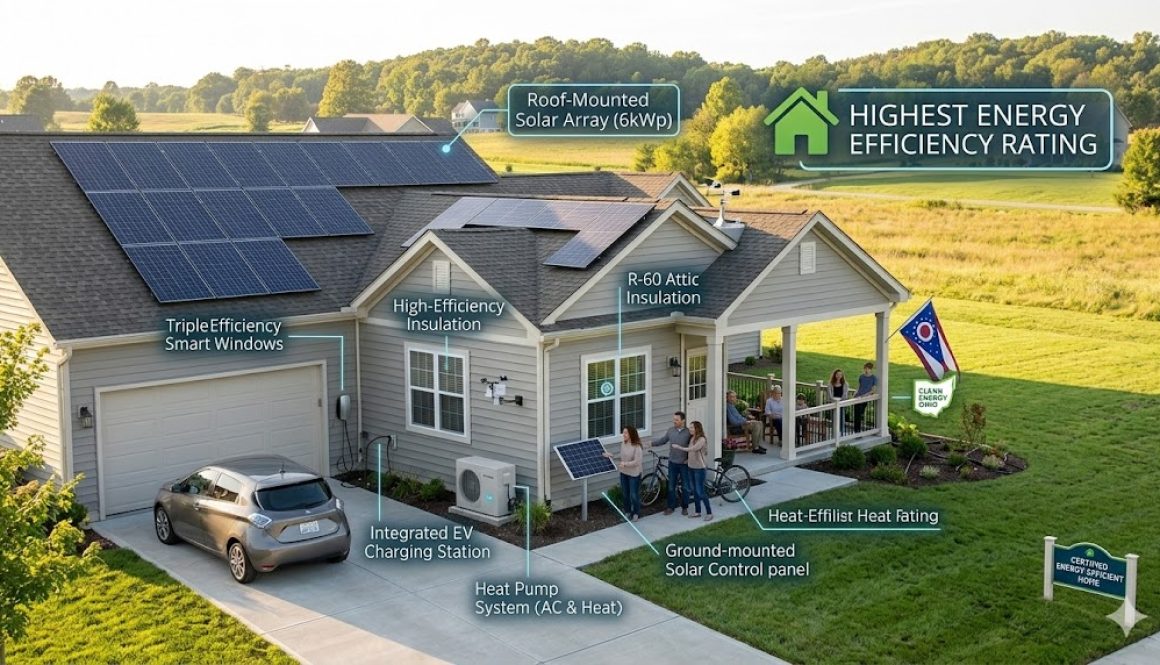
Cincinnati & Dayton’s Hidden Energy-Efficiency Incentives: How Homeowners Can Save in 2026
Energy efficiency has moved from a “nice-to-have” feature to a serious financial consideration for homeowners and real estate investors. Rising utility costs, new federal tax credits, and expanded local rebate programs are pushing more buyers to ask not just what a home costs, but what it costs to operate.
In the Cincinnati and Dayton housing markets, many homeowners are unaware of how many energy-efficiency incentives already exist — or how those incentives can influence resale value, rental performance, and long-term affordability. As 2026 approaches, these programs are becoming increasingly relevant for both buyers planning upgrades and investors evaluating return on investment.
This article breaks down the most relevant energy-efficiency incentives available in southwest Ohio, explains how they work, and explores how energy upgrades affect property value in real-world transactions.
Why Energy Efficiency Matters More Than Ever
Energy efficiency is no longer driven purely by environmental concerns. For most buyers and investors, it’s about monthly cost control and future-proofing.
Key factors driving interest include:
- Rising electricity and natural gas costs
- Aging housing stock in many Cincinnati and Dayton neighborhoods
- Expanded federal and state incentive programs
- Growing buyer awareness of operating expenses
Homes with lower utility costs are increasingly easier to market, especially to first-time buyers and long-term renters.
Federal Incentives Set the Foundation
While this article focuses on local and regional programs, federal incentives play an important supporting role.
Under current federal guidelines:
- Certain energy-efficient upgrades may qualify for tax credits, not just deductions
- Eligible improvements often include insulation, HVAC systems, windows, doors, and heat pumps
- Credits can offset a portion of upgrade costs over multiple tax years
These incentives often stack with utility and local programs, increasing overall savings.
Utility-Based Incentives in Southwest Ohio
Utility companies are a major — and often overlooked — source of energy-efficiency incentives.
Duke Energy (Cincinnati Area)
Duke Energy serves much of the greater Cincinnati region and offers programs that may include:
- Rebates for energy-eficient HVAC systems
- Incentives for insulation and air sealing
- Smart thermostat rebates
- Home energy assessments
Many of these programs are designed to reduce peak demand, which aligns with long-term grid planning.
AES Ohio (Dayton Area)
AES Ohio serves Dayton and surrounding communities and offers similar initiatives, such as:
- HVAC efficiency rebates
- Incentives for efficient water heating systems
- Programs targeting older homes with high energy usage
- Energy audits that identify cost-effective upgrades
For homeowners in older Dayton neighborhoods, these programs can be especially valuable.
Municipal and Local Programs You Might Miss
Beyond utility companies, some cities and counties offer:
- Property-based energy improvement programs
- Low-interest financing for efficiency upgrades
- Pilot programs focused on specific neighborhoods or housing types
These programs are often less visible and may change year to year, which is why many homeowners miss them entirely.
Buyers planning renovations should research incentives before closing, as eligibility sometimes depends on ownership timing or pre-approval.
Common Energy Upgrades That Qualify
Not every upgrade qualifies for incentives, but several improvements consistently offer strong returns.
Insulation and Air Sealing
Often the most cost-effective improvements:
- Lower heating and cooling costs
- Improve comfort
- Particularly impactful in older homes
HVAC System Upgrades
High-efficiency furnaces, air conditioners, and heat pumps:
- Reduce monthly utility bills
- Often qualify for multiple incentive layers
- Improve resale appeal
Windows and Doors
While more expensive:
- Improve energy performance and comfort
- Increase buyer appeal
- Can qualify for tax credits when efficiency standards are met
Smart Home Energy Controls
Smart thermostats and energy monitoring systems:
- Lower upfront cost
- Eligible for utility rebates
- Attractive to tech-savvy buyers and renters
How Energy Efficiency Affects Resale Value
Energy-efficient upgrades rarely add dollar-for-dollar value like kitchens or bathrooms — but they can influence how fast a home sells and who it attracts.
Homes with documented efficiency improvements often:
- Stand out in online listings
- Appeal to cost-conscious buyers
- Reduce negotiation pressure around utility costs
In competitive markets, lower operating expenses can tip buyer decisions.
Investor Perspective: Operating Costs Matter
For investors, energy efficiency directly affects:
- Net operating income
- Tenant retention
- Maintenance costs
Rental properties with lower utility bills are easier to lease and often experience:
- Longer tenant stays
- Fewer utility-related complaints
- Lower turnover costs
Some investors also market energy efficiency as a feature, not just a benefit.
Energy Efficiency and Older Housing Stock
Much of Cincinnati and Dayton’s housing inventory was built before modern efficiency standards. This creates both challenges and opportunities.
Older homes may:
- Qualify for more incentive programs
- Ofer greater improvement potential
- Require careful planning to avoid over-improvement
Strategic upgrades can significantly improve livability without compromising historic character.
Planning Ahead for 2026
Energy-efficiency incentives evolve regularly. Programs available today may expand, shift, or be replaced by new initiatives by 2026.
Homeowners and buyers can prepare by:
- Prioritizing upgrades with multiple benefits
- Keeping documentation for incentives and resale
- Monitoring utility and municipal program updates
Investors planning multi-year holds should factor future efficiency upgrades into capital planning.
Common Mistakes to Avoid
- Assuming incentives apply automatically
- Missing pre-approval requirements
- Over-investing in upgrades that won’t be recouped
- Ignoring local utility program deadlines
Energy efficiency works best when planned strategically, not reactively.
Final Thoughts
Energy-efficiency incentives in Cincinnati and Dayton represent a meaningful opportunity for homeowners and investors — but only for those who understand how to use them.
As buyers become more cost-aware and investors focus on operational efficiency, homes that balance upfront affordability with long-term savings will continue to gain attention. For those planning upgrades or purchases ahead of 2026, understanding these programs can translate into real financial advantage.

The Return of the Urban Core: Why Young Buyers Are Rediscovering OTR, Walnut Hills, and Dayton’s Oregon District
For much of the past decade, suburban and exurban housing dominated buyer interest across southwest Ohio. Space, affordability, and remote work pushed many households away from city centers. But as the market evolves, a notable shift is underway: young buyers are rediscovering the urban core.
Neighborhoods like Over-the-Rhine (OTR) and Walnut Hills in Cincinnati, along with Dayton’s Oregon District, are seeing renewed attention from buyers and investors who value walkability, character, and access to amenities. This return is not a rejection of the suburbs, but a recalibration of priorities — especially among younger professionals, first-time buyers, and small-scale investors.
This article explores why demand is returning to urban neighborhoods, what buyers are looking for, and how this trend is shaping housing decisions across Cincinnati and Dayton.
Why Urban Living Is Gaining Momentum Again
The renewed interest in urban neighborhoods is driven by a combination of lifestyle, economic, and demographic factors.
Changing Work Patterns
Remote and hybrid work initially fueled suburban growth, but over time it has also made
location choice more flexible. Without a daily commute, buyers can prioritize:
- Walkability
- Proximity to social and cultural amenities
- Neighborhood identity
Urban neighborhoods offer these benefits in ways that are difficult to replicate elsewhere.
Lifestyle Over Square Footage
Many younger buyers are willing to trade extra space for:
- Shorter commutes to social activities
- Reduced dependence on cars
- Access to restaurants, parks, and events
Rather than viewing smaller homes or condos as compromises, these buyers see them as intentional lifestyle choices.
Desire for Community and Identity
Urban neighborhoods tend to offer:
- Distinct architectural character
- Strong neighborhood identities
- Active civic and social engagement
For buyers seeking a sense of place, these qualities are often more compelling than newer, uniform developments.
Over-the-Rhine: A Maturing Urban Market
OTR has been a focal point of Cincinnati’s urban revitalization for years. What’s changing now is the type of buyer entering the market.
Shifting Buyer Profile
Earlier phases of redevelopment attracted:
- Early-stage investors
- Renters and short-term residents Today’s buyers increasingly include:
- First-time homeowners
- Long-term residents
- Small-scale investors focused on stability
This shift reflects a neighborhood that has moved beyond speculation into maturation.
Condo vs. Historic Home Demand
In OTR, buyers are often choosing between:
- Condos with modern finishes and shared amenities
- Renovated historic row homes with unique layouts Condos appeal to buyers seeking:
- Lower maintenance
- Predictable expenses
- Lock-and-leave convenience Historic homes attract those who value:
- Architectural character
- Long-term appreciation potential
- Customization opportunities
Both segments remain active, supporting a diverse housing market.
Walnut Hills: A Neighborhood in Transition
Walnut Hills represents a different phase of urban resurgence — one driven by incremental redevelopment and long-term investment. Why Buyers Are Looking Here
Walnut Hills offers:
- Proximity to downtown and major medical centers
- Larger historic homes than many urban neighborhoods
- Ongoing commercial and residential investment
For buyers priced out of OTR or seeking more space, Walnut Hills provides an alternative with upside potential.
Investor Interest and Caution
Investors are drawn to Walnut Hills for:
- Value-add opportunities
- Long-term appreciation potential
- Demand from renters tied to healthcare and education However, success requires:
- Understanding block-by-block differences
- Careful renovation planning
- Long-term holding strategies
This is not a quick-turn market, but one suited to patient capital.
Dayton’s Oregon District: Walkability With Character
In Dayton, the Oregon District plays a similar role to OTR, offering a dense, walkable environment with strong local identity.
What Draws Buyers
The Oregon District appeals to buyers seeking:
- A true neighborhood feel
- Independent restaurants and shops
- Cultural and community events
Its scale is smaller than Cincinnati’s urban core, but that intimacy is part of the appeal.
Housing Demand Patterns
Buyers in the Oregon District often favor:
- Smaller historic homes
- Condos and townhomes
- Properties with minimal yard maintenance
As Dayton continues to reinvest in its downtown, demand for housing near established districts remains steady.
Transit, Infrastructure, and Urban Access
Urban resurgence is rarely driven by housing alone. Infrastructure improvements play a critical role.
Transportation and Connectivity
Improvements to:
- Public transit routes
- Bike infrastructure
- Pedestrian-friendly streets
…make urban neighborhoods more livable and accessible, especially for buyers seeking car-light lifestyles.
Proximity to Employment
Urban neighborhoods often sit close to:
- Healthcare systems
- Universities
- Government and professional offices
This proximity supports both owner-occupant demand and rental stability.
Investor Perspective: Urban Demand Has Changed
Today’s urban investors are more focused on:
- Long-term tenant quality
- Neighborhood stability
- Cash flow over speculation
Short-term rental demand still exists, but many investors are shifting toward traditional rentals that benefit from steady neighborhood growth.
Urban properties can ofer:
- Lower vacancy rates
- Strong renter demand
- Higher rent per square foot
When acquired and managed carefully, they can complement suburban portfolios.
Common Buyer Misconceptions
Urban living is not without challenges, and buyers benefit from realistic expectations. Common misconceptions include:
- Assuming all urban neighborhoods are the same
- Underestimating renovation and maintenance costs
- Ignoring parking and zoning considerations
Successful urban buyers tend to research deeply and think long-term.
How This Trend Fits into the Broader Market
The return of urban demand does not replace suburban interest — it coexists with it. Southwest Ohio’s housing market is becoming more segmented:
- Suburbs for space and schools
- Corridor communities for flexibility
- Urban cores for lifestyle and walkability
This diversity strengthens the overall market by appealing to diferent buyer profiles.
What This Means for the Future
As younger buyers age and their needs evolve, many will remain in urban neighborhoods longer than previous generations. This supports:
- Continued reinvestment
- Stable demand
- Gradual appreciation
Neighborhoods like OTR, Walnut Hills, and the Oregon District are no longer fringe markets
— they are established parts of the regional housing ecosystem.
Final Thoughts
The renewed interest in Cincinnati and Dayton’s urban cores reflects a broader shift in how buyers define value. Walkability, character, and access to amenities are once again influencing housing decisions alongside price and space.
For buyers and investors willing to understand neighborhood dynamics and plan for the long term, urban cores in southwest Ohio continue to ofer meaningful opportunity — not as speculative plays, but as livable, evolving communities.